When my husband died, I was convinced that the life I had known had ended with him.
We had spent many years together. He was someone I could always rely on. He handled the everyday matters, the paperwork, and everything related to the bank. I had never paid much attention to the details of our finances because I trusted him completely.
After his death, I had to learn how to live all over again.
I was left alone in the apartment, where every object reminded me of him. During the first few months, I barely left the house. It was difficult for me even to open his closet or go through his documents.
That was when his brother first spoke to me about money.
He told me that before my husband died, he had left behind several financial obligations. According to him, some of the documents were in his possession, and certain payments needed to continue in order to avoid problems.
I was overwhelmed and understood almost nothing about legal or banking matters.
“Don’t worry,” he said. “I’ve checked everything. Just keep paying, and eventually it will all be over.”
He showed me the documents and explained which account I needed to send the money to.
I believed him.
After all, these were supposed to be my husband’s debts, and I didn’t want anyone to say after his death that I was trying to avoid his obligations.
At first, the amount seemed manageable — about $500 a month.
But when the first year passed, I realized how difficult it was going to be for me.
I had to give up many things. I stopped taking vacations, began saving money on clothes, and hardly allowed myself any extra expenses.
Every month, I put the money aside and transferred it to the account I had been given.
Sometimes it was really difficult.
“Maybe there isn’t much left?” I would ask my husband’s brother.
His answer was always more or less the same:
“Just a little longer. He really did have obligations. We simply have to see this through.”
The second year passed.
Then the third.
The fifth.
At some point, I stopped even asking how much was left. I simply accepted the payments as part of my life.
I worked, I paid, and I tried not to think about how much money I had already sent.
After ten years, the total had grown to tens of thousands of dollars.
The strangest part was that I had almost become accustomed to the idea.
I considered it my final obligation to my husband.
But one day, everything changed.
I received a call from the bank.
The employee introduced himself and asked me to come in personally. From the tone of his voice, I immediately understood that the conversation was going to be serious.
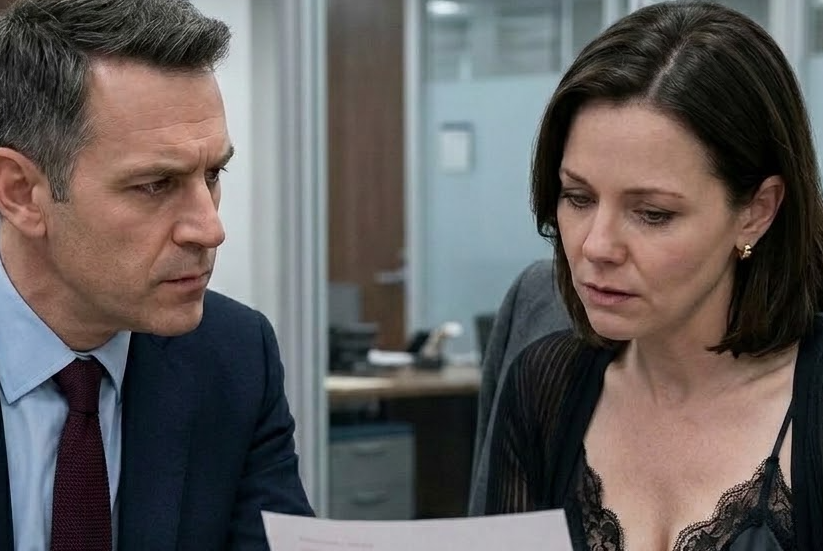
When I arrived, he spent a long moment reviewing the documents before saying:
“We’d like to clarify something. Do you genuinely believe that for the past ten years you’ve been paying off your husband’s debt?”
I stared at him in disbelief.
“Of course. That’s exactly why I’ve been transferring money every month.”
He remained silent for several seconds.
Then he turned his computer screen toward me.
“In that case, there’s something you need to know. According to our records, your husband never had such a loan.”
At first, I thought I had misheard him.
“Excuse me?”
“We checked the archived records, old accounts, and documents. There was no loan or credit taken out in your husband’s name that corresponds to the debt you’re describing.”
My hands began to shake.
I took out my phone and showed him the history of my transfers.
“But I’ve been sending money for ten years. Every month. I was told it was his debt.”
The employee carefully examined the transfer details.
After a moment, he asked me a question I would never forget:
“Do you know who this account actually belongs to?”
I shook my head.
That was when he told me the name.

It was my husband’s brother.
In that instant, I felt like I could barely breathe.
I asked again whether the bank was absolutely certain about its records.
The employee explained that this was exactly why they had opened an additional review.
It turned out that throughout all those years, my money had never gone to a lending institution or been used to pay off any kind of debt.
It had been transferred to the account of the man who had convinced me that I was carrying out my husband’s final wishes.
But that wasn’t the end of it.
During the bank’s internal investigation, they found old transactions and documents that helped reconstruct what had happened.
It turned out that a former bank employee had previously had access to information connected to my husband’s financial records.
According to investigators, that information had been used to create a believable story about debts that never existed.
My husband’s brother knew just enough to keep me from becoming suspicious.
He knew which documents to show me, what amounts to mention, and how to answer my questions.
And I trusted him.
Because he was the brother of the man I loved.
When I returned home after the meeting at the bank, I sat motionless in the kitchen for hours.
A folder filled with documents lay in front of me.
Ten years of transfers.
Ten years of giving up parts of my own life.
Ten years of believing I was doing the right thing.
And suddenly I understood: all that time, I had never been paying off my husband’s debts.
I had been paying a man who used my pain and grief against me.
Later, the case was turned over to law enforcement. The former bank employee and my husband’s brother were placed under investigation on suspicion of taking part in an organized fraud scheme.
For me, though, the hardest part wasn’t even realizing how much money I had lost.
I kept returning to one question:
How could someone look me in the eyes for so many years while knowing that I believed the lie?
I couldn’t get my husband back.
I couldn’t get back ten years of my life.
But at least I finally knew the truth.
And for the first time in a very long time, I stopped feeling guilty for supposedly failing to fulfill my husband’s final obligation.
Because that obligation had never existed.
For all those years, I had believed I was preserving the memory of the man I loved.
In reality, someone had used that love against me.