
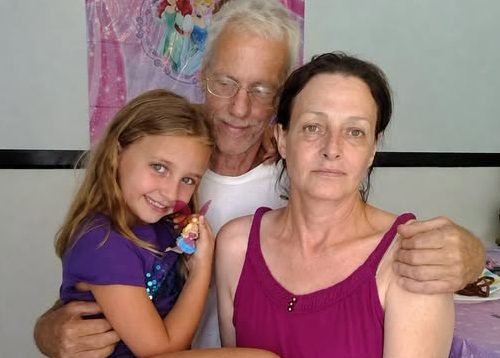
“My grandfather secretly took me into his room every night… When my mother discovered why, she sat down on the floor and burst into tears.”
My daughter was only eight years old when I noticed that every evening after her bath, she would secretly go into my father’s room.
At first, I didn’t think much of it. My father, George, was seventy-six and had come to live with us after my husband passed away so that we wouldn’t be alone. He adored Emily and often read her bedtime stories.
But before long, their behavior started to seem strange.
Every evening around nine, my father would stand in the hallway and quietly say:
“Emily, it’s time.”
My daughter would immediately put down her toys and follow him. As soon as they entered his room, they would close the door.
Whenever I came near, their conversation suddenly stopped.
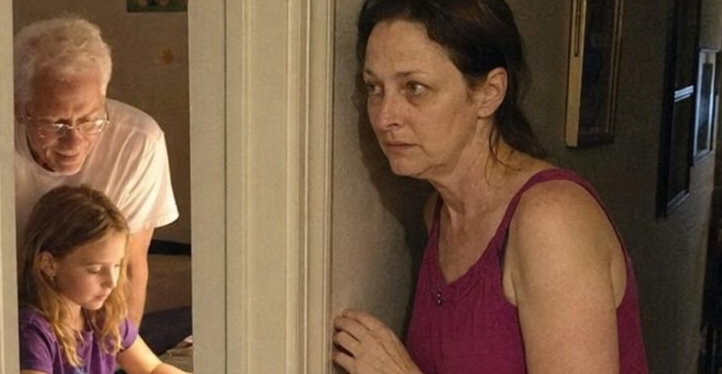
One evening, I tried to open the door, but it was locked from the inside. I knocked. For several seconds, no one answered.
Then my father opened the door just wide enough for me to see his face.
“What are you two doing in there?” I asked.
“We’re just playing. That’s all.”
I tried to look past him, but he blocked my view of the room with his body. Emily was standing near the desk, hurriedly hiding something behind her back.
“What are you holding?” I asked her.
She looked at her grandfather, then turned toward me.
“Nothing, Mom.”
That night, I couldn’t sleep.
Over the next few days, the situation became even more unsettling. Emily started waiting until I went into the kitchen before quietly knocking on her grandfather’s door. When she went inside, my father would sometimes lock the door.
One evening, as I walked down the hallway, I heard my father say:
“Don’t tell your mother yet. If she finds out now, the whole surprise will be ruined.”
Emily whispered:
“I promise.”
My heart tightened.
I tried to convince myself that my father would never hurt my daughter. He had raised me with love, worked as a teacher his entire life, and was one of the kindest people in our family.
But then I noticed that Emily was becoming quieter after school. Some evenings, she said she was tired and refused to eat dinner. I found crumpled sheets of paper in her backpack covered with corrections in red ink.
One day, her teacher called me and said Emily had refused to read aloud in front of the entire class. When another student laughed at her, she ran into the bathroom and refused to come out for a long time.
I tried to talk to her.
“Emily, is someone hurting you or bullying you at school?”
“No.”
“Then why don’t you want to read in front of the class?”
She lowered her head.
“I just don’t like it.”
At that moment, my father appeared in the hallway. He had heard our conversation.
“Let her rest tonight,” he said. “I’ll talk to her later.”
I became angry.
“You’re always protecting her! What are the two of you doing every night behind that locked door?”
My father turned pale.
“You’ll find out soon.”
“I’m her mother! I shouldn’t have to wait!”
Emily ran over to her grandfather and took his hand.
“Please, Grandpa, don’t tell her yet.”
Once again, they were hiding something from me. That evening, I decided to put an end to all those secrets.
At around nine-thirty, Emily went into my father’s room. The door closed. I waited about ten minutes, then quietly walked over.
I could hear my daughter’s voice inside. She was struggling to pronounce the words. Every so often, she would stop and then start the same sentence again.
Then I heard my father say:
“Don’t be afraid. Even if you make a mistake, keep going. Your mother won’t be able to protect you your whole life. You have to learn to do it on your own.”
I couldn’t take it anymore.
I used the spare key, unlocked the door, and walked into the room.
What I saw completely froze me in place…
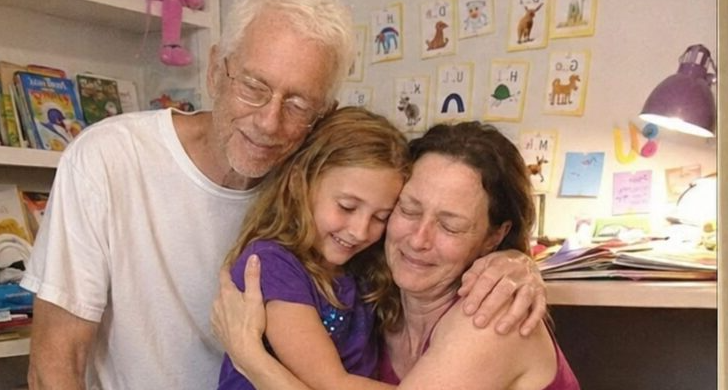
Hundreds of sheets covered with words printed in large letters were hanging on the walls. The desk was covered with children’s books, colorful cards, and small wooden blocks marked with letters.
My father was sitting beside Emily, and my daughter was holding a letter in her hands.
She began to read slowly:
“Dear Mom, I’m sorry I didn’t tell you the truth. I’m not stupid. It’s just that sometimes the letters get mixed up in front of my eyes…”
My legs gave way beneath me.
My father came over and took my hand.
“Emily has dyslexia,” he explained. “I noticed it several months ago. She was afraid to tell you because she had heard you say more than once that she would read better if she just paid more attention.”
My throat tightened.
I really had said those words.
I thought my daughter simply had trouble concentrating. Every time she got a poor grade, I gave her extra exercises, without understanding how difficult every single word was for her to read.
“Why didn’t you tell me?” I whispered.
My father looked at Emily.
“She wanted to read an entire letter to you by herself for the first time. I promised I would help her.”
I learned that my father had been working with her every evening using learning methods adapted to her needs. He had contacted one of his former colleagues who specialized in learning difficulties, researched dyslexia, and even made colorful cards to help Emily tell letters apart more easily.
My daughter walked over to me.
“Mom, I didn’t want you to think I was stupid.”
When I heard those words, I sat down on the floor and burst into tears.
I wrapped my arms around her so tightly that my hands began to shake.
“You were never stupid. I was the one who made a mistake because I didn’t understand what you were going through.”
My father sat down beside us and wrapped his arms around both of us.
Two months later, Emily volunteered to read aloud in front of her class for the first time.
She made a few mistakes.
But this time, she didn’t stop.
She kept going.
When she finished, the other students applauded, and her teacher sent me a video.
That evening, the three of us took a new picture together.
Emily was sitting on her grandfather’s lap, holding the first book she had managed to read completely on her own.
I stood beside them.
And this time, I was smiling.
Even today, Emily still goes into her grandfather’s room every evening.
But the door is never locked anymore.
Sometimes I sit beside them and remember the most important lesson my father ever taught me:
A child doesn’t always ask for help with words.
Sometimes their silence is the loudest cry for help. 💔❤️