
My 18-year-old daughter, Mary, became an organ donor.
For nearly a year, my husband Jonathan and I spent almost all our time at the hospital. He wasn’t Mary’s biological father, but he had helped raise her and had always been there for her like a real dad.
One day, Mary looked at me and said:
“Mom, if I don’t get better, I want to donate my organs. If it can help someone else, then at least all of this will have meant something.”
I didn’t even want to hear about that possibility.
I still believed Mary would recover.
Jonathan, however, respected her decision. Mary signed all the necessary documents.
Three weeks later, I lost my daughter.
Before the procedure, doctors, nurses, and other hospital staff lined the hallway to say goodbye to her.
I stood beside Jonathan, unable to stop crying.
He wrapped his arms tightly around me.
“She did something extraordinary,” he whispered.
A few minutes later, his phone rang.
Jonathan looked at the screen and suddenly went pale.
“I need to go downstairs,” he said.
Then he hurried away.
Almost immediately, I heard quick footsteps behind me.
“Wait!”
I turned around.
It was Mary’s doctor.
He looked at me as though there was something he had wanted to tell me for a long time but had never known how to begin.
“I hoped I wouldn’t have to tell you this today,” he said quietly.
“Tell me what?”
The doctor took a deep breath.
“Your husband asked me not to tell you the truth about Mary.”
I froze.
“What truth?”
He gently placed a hand on my shoulder.
“I think you should sit down.”
At that moment, I felt as though everything I thought I knew about the final weeks of my daughter’s life might have a completely different meaning.
Later, the doctor explained that before Mary died, she had wanted to know whether one of her organs could help a specific person.
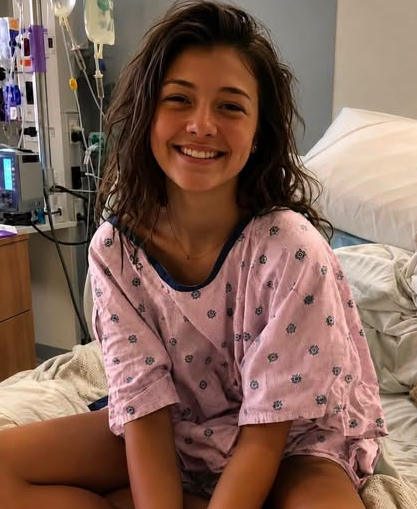
Not long afterward, I saw Jonathan standing beside a couple I had never met before.
When I approached him, he remained silent for several seconds.
Then he simply handed me a letter.
I immediately recognized Mary’s handwriting.
My hands were trembling as I opened the envelope.
The first line read:
“Mom, if you’re reading this, it means what I hoped for really happened.”
During her treatment, Mary had met a young woman named Sophie who was waiting for a transplant.
They spent time in the same hospital.
They started talking.
Over time, they became friends.
Mary learned that Sophie had a young daughter waiting for her mother to come home.
That was when Mary asked Jonathan to quietly find out whether, after her death, one of her organs might be able to help Sophie.
I kept reading, but there was one thing I couldn’t understand.
Why hadn’t they told me?
Why had Jonathan agreed to keep something so important from me?
The answer came a few lines later.
Mary knew that until the very end, I still believed she would recover.
Every day, I talked about her coming home.
About her room.
About everything we would do when her treatment was over.
She didn’t want to take that hope away from me.
She didn’t want me to keep hoping for her recovery while also thinking about the possibility that her death might help someone else.
She had written:
“I couldn’t come home with you, Mom. But I hope I can help Sophie go home to her daughter.”
I had to stop reading.
Tears streamed down my face.
Jonathan stood beside me in silence.
I was angry with him.
Part of me wanted to ask how he could have hidden something so important from me.
But slowly, I began to understand why he had done it.
It hadn’t been his decision.
Mary had asked him to keep her secret.
That same day, Sophie underwent surgery.
The transplant was successful.
Later, her family came to see me.
They tried to thank me, but I shook my head.
“Don’t thank me,” I said. “It wasn’t my decision. Mary made that choice.”
For a while, it was difficult to accept that Jonathan had known the truth while I hadn’t.
But with time, I began to see everything differently.
During her illness, Mary had lost control over almost every part of her life.
The doctors decided which tests she needed.
The hospital determined her appointments.
Her own body responded less and less to what she wanted.
She couldn’t decide whether she would recover.
But she could decide what she would leave behind.
And she wanted at least that final decision to belong to her.
I could no longer bring my daughter home.
That was the hardest reality I had to accept.
But because of Mary’s decision, another family received what I had hoped for until the very last moment.
The chance to see their daughter come home.