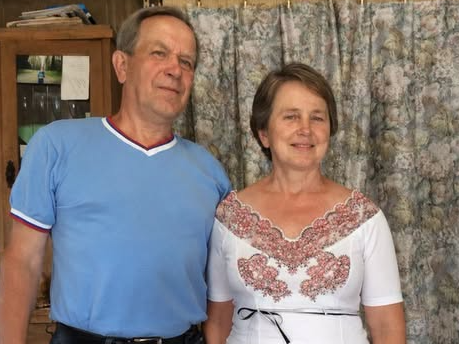
For twenty years, my husband made me keep my hair short against my wishes. For a long time, I believed it was simply his way of controlling me…
Until one day, after he was hospitalized, our hairdresser handed me a box she had kept for twenty years. 😱💔
Before I married my husband, Daniel, my hair reached almost to my waist.
I loved it.
Ever since I was a child, my mother had told me it was one of my most beautiful features. When I walked, it moved softly down my back.
During the first months of our relationship, Daniel often ran his fingers through it and said:
“Never cut it. You look beautiful like this.”
But only six months after our wedding, something changed.
One Sunday morning, he took me to the small hair salon in our neighborhood.
When I asked why we were there, he simply said:
“It’s time to cut it.”
I laughed, thinking he was joking.
“Just the ends?”
He looked at Martha, the hairdresser, and said in a cold voice:
“To the shoulders. Maybe even a little shorter.”
I froze.
“Daniel, I don’t want to.”
“It’ll be better this way.”
“Better for who?”
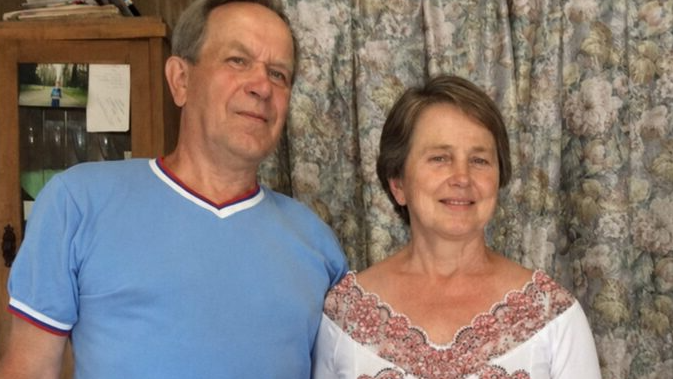
He didn’t answer.
I should have stood up and walked away. But I was only twenty-six, newly married, and I still believed that sometimes you had to compromise to keep the peace in a marriage.
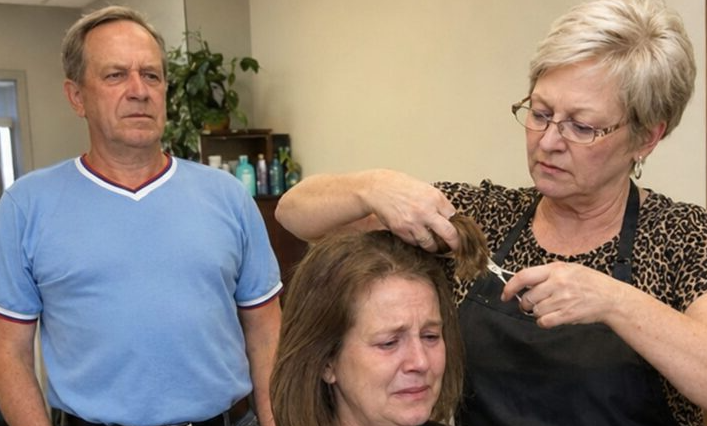
That day, my hair fell onto the white tile floor while I cried in front of the mirror.
Daniel stood behind me.
He wasn’t smiling. He didn’t try to comfort me. He simply watched Martha carefully gather my cut hair.
When we got home, Daniel wrapped his arms around me and whispered:
“One day, you’ll understand.”
I pushed him away.
“I don’t want to understand anything.”
I thought it would happen only once.
I was wrong.
Every time my hair grew past my shoulders, Daniel made another appointment with Martha.
At first, I argued with him.
Then I begged him.
Once, I secretly avoided the salon for three months. When Daniel noticed that my hair had grown longer, his expression changed.
“Tomorrow at eleven, we’re going to Martha’s.”
“I’m not going.”
“Laura, please don’t make this difficult.”
“You’re the one making it difficult. It’s my body, and it’s my hair.”
He stared at me silently for several seconds.
There was no anger in his eyes.
There was something much stranger.
Fear.
But a moment later, he became cold and unyielding again.
“We’re going tomorrow.”
One day, one of our neighbors saw me getting into the car in tears.
Later, she pulled me aside and asked:
“Does Daniel control you? Does he force you to do other things too?”
I defended him.
I explained that he had never hit me, never raised his voice at me, and that in almost every other part of our life together, he always took my opinion into account.
And yet even I couldn’t understand why I was defending a man who had ignored one of my simplest wishes for years.
As time passed, our children began to notice it too.
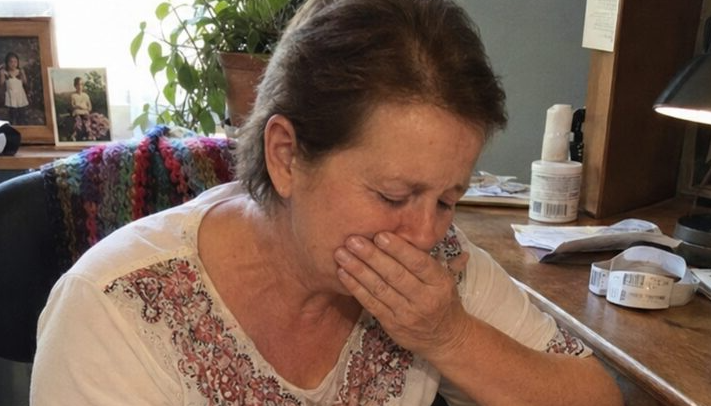
Our daughter Emily was sixteen when, one evening, she asked me:
“Mom, why do you always have the same short haircut? Your hair was so long in the old photos.”
Daniel, sitting across the table, put down his cup.
“Your mother looks better this way.”
“I wasn’t asking you,” Emily replied sharply.
That night, Daniel and I had a terrible argument.
I told him I’d had enough. I said I would never cut my hair again.
He sat at the kitchen table, buried his face in his hands, and remained silent for a long time.
Then he said something I couldn’t forget for years:
“I made a promise. I can’t tell you who I made it to, but I can’t break it.”
“What does my hair have to do with a promise you made to someone else?”
He looked up at me.
“Far more than you can imagine.”
But he refused to tell me anything else.
And so twenty years passed.
Every six or seven months, it was always the same: the same salon, the same chair, the same Martha, and the same strange silence.
Martha never threw away my cut hair.
She carefully tied it together, placed it inside a paper envelope, and carried it into the back room.
Whenever I asked what she did with it, she always gave me the same answer:
“Daniel asked me to.”
I began to think my husband was keeping my hair.
Maybe it was some kind of unhealthy obsession.
Or maybe he simply liked knowing that he could control me.
The truth came out three days before our twentieth wedding anniversary.
Daniel suffered a heart attack on his way to work.
He survived, but remained unconscious in the hospital for several days.
I went home to find his insurance documents.
For the first time, I opened the locked bottom drawer of his desk.
It contained photographs.
Dozens of them.
They showed girls and women of different ages, all with long brown hair.
At first, I thought Daniel had another family.
Then I noticed that some of the women were wearing wigs.
On the back of every photograph was a date and a short message.
“Madison, 8. She went back to school.”
“Claire, 34. She attended her daughter’s wedding wearing the hairstyle she loved.”
“Sophia, 12. She doesn’t wear a hat anymore.”
My hands began to shake.
At the bottom of the drawer, I found an old letter written in my mother’s handwriting.
It had been written a few weeks before our wedding.
“Dear Daniel,
Laura doesn’t know that before her sister died, she asked for a wig made from her hair to be given to the next sick child who needed one.
After the accident, Laura lost all memory of those months. The doctor says forcing her to remember could break her all over again.
Please, if you ever have the opportunity, continue what the two sisters started. But don’t tell Laura the truth until you’re certain she’s ready to hear it.”
I fell to my knees.
In my memories, I had always been an only child.
My mother had assured me that the months before my accident—the months I couldn’t remember—weren’t important.
And yet, once, I had a sister.
Anna.
She had been ill, and whenever my hair grew long enough, I used to cut it and donate it to people living with the same illness.
Daniel had not been keeping my hair.
For twenty years, he had been sending it to an organization that made wigs for people who needed them. He had also quietly paid for the cost of making every single one.
Before returning to the hospital, I went to see Martha.
She handed me one final envelope.
“Daniel always said that one day he would tell you everything himself,” she whispered. “But every time, he was afraid of losing you all over again.”
When Daniel opened his eyes, I was sitting beside his hospital bed.
He looked at my hair and asked weakly:
“Has it grown?”
I took his hand.
“Yes. But the next time I cut it, it will be my decision.”
His eyes filled with tears.
I forgave him.
But I also told him something he needed to hear.
Having a good reason did not give him the right to make decisions about my body for twenty years.
He could have told me the truth sooner.
He could have trusted me.
He could have believed that I was strong enough to face it.
On our wedding anniversary, I sat in Martha’s chair once again.
This time, Daniel demanded nothing.
I was the one who asked Martha to cut my hair.
And when she raised the scissors, I finally remembered my sister’s voice clearly:
“If my hair can’t save me, let it at least help someone else smile again.”